Where Did She Go?

Where Did She Go?

desk with papers

During the day I am at the helm, control central, where I guide our lives, as I work on my computer, write, blog, create graphics, check social media, respond to emails, pay bills, order groceries, make/take phone calls, and even do my recent class work for McMaster University.

My Love seems to need me to be in sight at all times. So it made sense to move my work space to the dining room. I fashioned a desk from my keyboard stand with a shelf I confiscated from a bookcase That wee shelf holds my laptop and added 24″ monitor on a spice rack spinner, pencils and pens, papers, electronic cords, and eyeglass cases that store USB keys.

There is no room on the shelf for my reference books, and notebooks and extra hard drives. They are in a box on the floor beside me, and in a basket behind me. I do have my office chair…far better than our old couch.

loved one painting

From here, I face My Love and he can see that I am still here, me, “Judy Shone, his lady who takes care of him.” He feels calmer if he knows I am nearby at all times.

From my position in the dining room, I can move back and forth between the living room when I help My Love. I encourage his colouring, make sure he drinks his water, and takes his pills.

Then, from this position, I can get up and go to the kitchen to make meals, get coffees, wash dishes, prepare meals for the week. I am easily able to go back and forth to my make-shift desk between tasks.

I can manage the CDs, music and radio from the speaker off to my side. The only downside is the intense heat from the curtained southern window when there is sunshine. I have a screen I put up behind me I can adjust and it works.

When I take a break, serve and eat meals, take a nap on the couch, I move into the living room to be with My Love. We no longer use the dining room for meals because over the years it has been taken over by my office props.

When I sit in the living room, we talk, see what is on the TV that might be decent to watch…not loud, not too fast, not too weird for people ‘of a certain age.’ When we chat, I try to find something funny so we can find reason to laugh…oh, how we need to laugh! And laughing with someone else makes it much better.

sundown image

In the evening, as part of his sundowning, he goes through a definite routine that, for me, is somewhat like seeing a play over and over, with nuanced changes.

His episodes usually begin just before I serve dinner. I sit near him on the couch during his episode. Then I have dinner with him, and afterwards take a rest for thirty minutes. I am there, on the couch – me, “the lady who made dinner, who brought him his meal, the lady who takes care of him.” He feels safe…safe equals calmer.

And when the dishes are done, I go back to the computer to check emails, answer emails, and begin to shut it down. While I am there, inevitably, he points to the spot on the couch where I had been seated and asks, “Where did she go?” …the lady from the living room.

I always have to explain that I am that lady, the one who just had dinner with him, that I am the lady who just gave him his pills.

“Who me? You helped me with pills?” he asks, not remembering that short time ago.

I explain I am the lady who helped him shower, who washed his hair and shaved his face in the morning. I am the lady who took him to the doctor and picked up his meds at the pharmacy in the afternoon. He is not connected to what I am saying.

And then he looks at me and says, “Where did she go?”

I used to think it was a joke for laughter, but I know now it is not. He is serious.

During sundowning, he has to be coached to remember me or my name. I don’t work on that much any more. It does not matter. I accept that every night he will have trouble differentiating between the ‘me’ sitting at the desk across from him and the ‘me who is the lady who was just sitting on the couch, who takes care of him.

He always wants to know how he can find the lady who was on the couch. “Did she leave?” he asks.

Then he refocuses and asks “Where did they go?” referring to those night visitors who have come nightly for years. I still do not see them. And I still tell him I was in the kitchen and missed them.

two of me

I move back and forth between the couch and chair trying to show him I am the person he is looking for. But he is not convinced.

I expect he will ask where his car is. I have printed out the sales receipt from when he sold it almost five years ago so I can go through the story of how the axle broke. He shakes his head ‘yes’ when I tell him he sold the vehicle because he could not afford to fix it.

Next, he will ask where his driver’s license is. I repeat how the Ministry took it because he has Alzheimer’s. That is tricky because he does not believe anything is wrong with him. I quickly try to distract him.

And then he shifts back to, “Where did she go?” and it begins again.

“No, I don’t think you are the same person who sits on the couch and sits at the desk,” he tells me, firmly. “I need to find her.”

“Let’s go look at some pictures,” I say as I take his hand to lead him to see some photos of the two of us hanging on the wall in the bedroom. Holding hands generally is a calming factor. Then, seeing pictures of the two of us again helps him recognize me, at which point, every night, he begins to come back to his current ‘normal’ state. Life goes on.

signoff initials

See Night Visitors on this site about his nightly visions.

~jas

Where Did She Go? Copyright (c) 2020 Judith Allen Shone

Telling Time

Telling Time

November 02, 2020 by jas

bear and sand timer

It was the fall weekend when daylight time changed back to standard time in this already strange year, 2020.

And that’s exactly what made me think of sharing the recent behaviours related to changing a clock and telling time in My Love’s life in Alzheimer’s world.

Today, as My Love seems to be crossing ‘the line’ into stage seven Alzheimer’s, he sits and looks at his watches, one on his right wrist and one on his left, both working. Incredibly, he still associates one to his boating days – even though the rest of his boating history has all but vanished – and the other watch has clearly marked numbers, and, fortunately, winds by wrist movement. He observes the hands on each one move, but he struggles to tell time, regardless which watch he checks.

My Love often fiddles with his watches. ..he had more than two. He usually compares them to the other clocks he could see in our home. He no longer knows how to wind them, change them and, now lately, he no longer can tell me the time.

“The time is wrong,” My Love broke the silence. It was a simple comment.

At first I had no idea what he was on about. What was he telling me? And then I glanced at the time on the corner of the computer screen and then my watch and realized I had forgotten all about the hour change the night before. I had not changed our clocks from daylight to standard time. But how did he know that? I never mentioned it. How on earth did he associate his watches with the time switch? Or was it another coincidence?

“What makes you think the time is wrong?” I asked, not really expecting him to have an answer. “Are you telling me that I did not change the clocks?”

analog writstwatch

And, of course, My Love did not have an answer. He could not find words to tell me what he meant. He just shook he head, which I took to mean he didn’t know.

Not one of our clocks is changed by any computer program except my laptop, iphone and ipad and he never uses them. The wall clocks, stove clock, alarm clock, dementia clock and our watches all need human intervention to correct the time.

Born in late 1930s and early 1940s, we grew up learning the analog clock, how to tell time by the hands moving around the numbers on the clock face. We learned the short hand tells us the hour and the long hand tells us the minutes before or after the hour. We learned the hand that moves around, ticking in seconds, gave more exact timing. It seemed so simple.

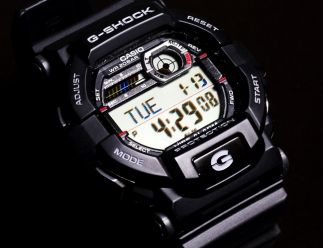
digital writstwatch

My Love never chose a digital watch. It made no sense to want to know the time that had passed…6:40 did not tell him he still had twenty minutes before seven! He’d see 6:40, but still have to convert it to ‘twenty minutes before seven’ in his mind. And now, that extra step complicated the process for one with memory loss.

We have a digital clock, created especially for those with dementia, and recently, he asks me what the numbers mean.

Over the years I have noticed My Love likes to look at the hands and know where he is in time with relation to what is coming next. For him, a person who always seemed to focus on ‘now’ and what was ahead, the past remains irrelevant in terms of telling time.

His mind works hard to tell me specifically where the short hand is and where the long hand is. The words aren’t there. It is not the clock, but his disappearing connection between words and concepts, that make his struggle to tell time agonizing for me to witness. He gets frustrated with his helplessness. When he wants to say the numbers, he fumbles with the missing words he is trying to say, making his frustration an added distraction from his telling the time. Many times, he just forgets what he was trying to tell me.

lalrge wall clock

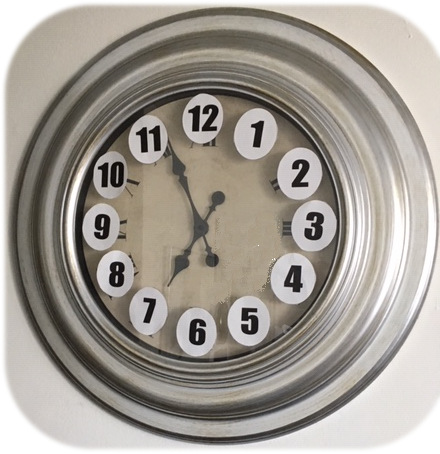
My Love even finds it difficult to convey the time using the over-sized analog clock on the wall….which I crudely converted from Roman numerals to Arabic numerals. He compares it often to those on his wrists. He finds it easier to distinguish the long and short hand on the large clock, but none help with his mental ability to tell me the time. It is not the hands on the clock, but the missing words in the mind that hinder his time telling.

But somehow, he knows that when the large hand is on the twelve and the small hand is on the nine, it is time for bed. My Love comes to me, with his finger pointing to the nine. He does not say, “it’s nine o’clock,” but instead, tapping on the crystal, tells me “time for bed.” The connection to his watch, the nine and bed somehow still relate; he just can no longer verbalize.

So how on earth did My Love have that brief moment of clarity to relate the time on his wristwatch to the time that was supposed to have been changed back to standard overnight? How did he know the time was wrong? Because, indeed, it was wrong. I will never comprehend that. But the clocks are now changed, and, it appears, his new normal, for a few moments in time, will be to point to numbers rather than speak them. All is well.

signoff initials

~jas

Telling Time copyright (c) 2020 Judith Allen Shone

Wristwatch photo image by MonacoCannes from Pixabay
Digital watch image by Pexels from Pixabay
Hourglass image by anncapictures from Pixabay


Read the stories that tell the ‘rest of our story!’

Accepting the Gift of Caregiving,
“Is There Any Ice Cream?” and “Did You Hide the Cookies?”

Visit website: Caregiver Challenges
Available from booksellers locally and online.
See Amazon.ca (Canada) or Amazon.com (US)
Judith Allen Shone, author.

two books

Thank you.

Feeling Warm or Cold?

Feeling Warm or Cold?

trees

The last couple days, it has been chilly…that crisp fall air that portends of coming winter… with daytime temps ranging between 7 to 11C and damp, as we expect in fall. Colours are fading and barely hanging to the tree branches, ready to flutter to the ground with the slightest wind.

Yet, My Love has been choosing to wear his short sleeve, summer shirts, even when I was putting out long sleeves for him to consider.

Do I now understand why some senior homes keep their temperatures so warm? 

“Are you cold?” I asked. “Do you want me to get your sweater when I get mine?” 

“No, no,” he assured me. “I am fine. “

Today, as I passed behind him, and gave him a little love-hug, I felt how cool he was and got his sweater. To my surprise, he was really glad to have it!

“That feels good,” he said, surprised himself that he needed it.

man

I realized right then that he no longer could tell me he was cold, that when I asked, he could no longer connect my word ‘cold’… with a temperature, a feeling or a doorknob…it meant absolutely nothing to him at that moment.

It is so incredible what bits and pieces of the brain this disease picks away!

I can’t even write the sounds he makes so readers can know how frustrating it is to require extra effort for most recent conversations ! He might say random words; he just cannot say what he seems to want to communicate. More vanishing words! See Where Do the Missing Words Go? here on this site.

I had no idea that loss of temperature recognition was coming! I should have realized it would take words to tell me, but I missed it! I have so much still to learn, even after nearly nine years!

Readers: Tell us about new behaviours have you watched unfold right before your eyes, especially those that you never expected.

woman reading

This behaviour tells me he either does not feel that he is cold, or he cannot connect the feeling with lower temperature and needing a sweater.  

He has always been warmer than me so I was slow on this one! The sad reality is that he cannot tell me…his brain and his words many times now have no idea what I said and cannot tell me what he is thinking…the connections are vanishing, apparently n both directions.

bed

I have an extra blanket on the bed.

“I don’t need a blanket. I am fine,” he repeats his appropriate script that somehow survives: “I am fine.”  

After he is asleep, I put a light cover over him, as if he were my two-year-old!

patience

The building managers don’t turn up heat until November here, so I must pay more attention. Now I know not to ask if he is cold, I will just put a sweater on him in the morning or a blanket in the evening until when he seems to need it! He really does need me to guide him in dressing! This is how I find out…not through words!

And so each day, I still learn something new about the brain and the disease that has been stealing bits and pieces of it from My Love for a very long time. It is incredible what these dementia diseases teach us while still helping us develop patience!

signoff initials

~jas


Feeling Warm or Cold? Copyright (c) 2020 Judith Allen Shone


Order from Amazon or online from local booksellers…
paperback, hardcover, eBook formats available.