
February 23, 2021 by jas


Communication Strategies will need to change
My Love has declined quite a bit in the last two years, spanning the period between stage six and stage seven on the Alzheimer’s spectrum, as his doctor defines it. My Love’s communications skills, listening and speaking, have been vanishing more and more daily. As a result, talking between us has all but vanished, too, and these days we may sit what seems like hours in silence.
Well, then you can imagine there is nothing more exciting for me than to be thinking I am facing another afternoon of no conversation, when all of a sudden some question I ask appears to be a trigger and My Love begins to ‘rattle off’ in attempted conversation. I cannot always understand his syllables of nonsense, but he is making an attempt at communication!
Communication strategies will need to change to keep up with the declining recognition in words and their meanings.
I glance at my list of suggested questions to grab some ‘word’ ideas in case I happen to understand any word he is saying. If I would be so fortunate, I might be able to elicit more in that memory thread by asking a related question, hoping to get a response. I do get a big smile when he recognizes that I understand the words he just spoke…which I am not always able to do…sadly.
Many days I end up talking to myself. After all, I listen, and then respond. Meanwhile, My Love many times is watching an old TV program because he has resisted doing anything at all with me. I am used to it now. He used to like to talk, a few years ago he could be quite animated when telling stories. When his attention span was greater, we used to draw together, or paint, or look at pictures. Sadly, those interests are mostly gone… but how much fun it is when there is a wee glimpse of ‘what used to be’ that comes through for a few moments of conversation in a day. Happiness!
Options
This Wordart graphic and my list of questions were created to have ready ‘word triggers’ for visitors or for me when talking with My Love, or if I was at a loss for words when he lost understanding of my words or for finding his own. It happened!

Question for discussion are usually better if they require “yes” or “no” answer so there is not so much information for the loved one to have to sort through to answer. If they do not answer the question as you ask, it does not matter if they ramble on about something else…let their brain work, let them tell stories as they wish, true or not. Play along with them. Otherwise, questions can sound like a “test” which puts most people off and takes away any fun in the conversation. DO NOT ARGUE with them. Their world and ours are different.
Sit in a quiet place where interruptions and other distractions can be limited and allow relaxation. Ask a question. Let them think about it and then answer. I only help him find an answer when I am trying to get a specific answer. (Did you find your shoes? Was it cold outside?) Otherwise, we are just two people together talking the ‘words that come out’ and the topic probably does not matter. Frustration comes when the loved one feels he is failing. Just move to a new question to distract if the original one fell flat. SMILE. Keep them feeling relaxed. DO NOT ARGUE with them. Don’t be disappointed if they won’t talk. It might be a phase, or they might not feel well. Observe and go with the flow. Find a way to move on. Smile.
They may need you to mention an example to focus their thinking. or they may need help with answers…ask them if they want help. There may come a time when many of the answers will have been forgotten. Certain memories disappear earlier than others. That is part of the disease. Just do what comes naturally, with compassion with your loved one. DO NOT ARGUE with them. Let them lead the topic. It does not matter if they are right or wrong. It does not matter. No one needs to have a debate with anyone. In your discussion with your loved one with memory loss, it does not matter.
Generate conversations…our loved ones want to be involved.

IF THEY SEEM TO STRUGGLE, help them with words, don’t ask them to guess or remember. If a word you say triggers their conversation, go with the flow. Step into their reality with them. Just listen to them and let them lead the narrative. Let them feel comfortable. Do not force a memory from them. Don’t make them remember something that they don’t. Refrain from arguing or correcting them. Accept that what they recall is their reality – It does not matter that things seem different to them. This is their reality now. Today can be their birthday. Today Uncle Joe might be visiting. Today you might not be Mom. True to you or not, it is their reality.
Questions related to family, school, people, hobbies or music they liked that might bring good memories. These are not questions for direct communication, but ideas to help find their interest. Let them lead the conversation by the words they say... follow their lead.
Try saying, “TELL ME ABOUT______…” See if they will tell you more or lead to you a topic they like.
“Hi I’m Sally, I’m here to give you a shower.” Don’t loved ones them guess at your name, even if they’ve know you a long time. Let them know what you are going to do, why you are there. Surprises usually are not comforting. See what type of communication they feel best with and follow their lead.
Communication was never a test of My Love’s knowledge, but always about the interaction between us. He liked being social, and talking with someone made him smile. The content of the conversation was never as important as being together and listening to what he said, making him feel heard.
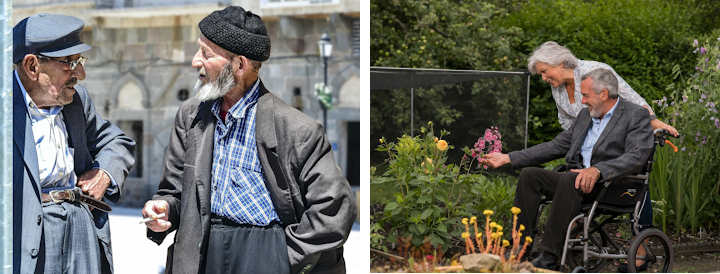
Prompts to get you started
If something on this list seems it might trigger interest, work your way into a conversation by letting your loved one guide you once you picked a topic. If there is no ‘spark’ or connection, go to another topic. Let them guide you. Their place along the dementia spectrum will be reflected in their ability to carry on a conversation. ‘Stay in their reality’ to help them feel less stress and allow them to say what is on their mind. It really does not matter right or wrong in your world. It is their world you are in when talking to them.
- Show me your room.
- Tell me about the park
- Do you like cake?
- Tell me about drawing?
- What do you do outside?
- Tell me about where you live?
- Tell me about a tree.
- Tell me about a dog or cat.
- Tell me about your family.
- What do you like to do?
- Tell me about your picture you painted.
- Tell me about summer camp?
- Did ride your bike?
- Where do you like to play?
- Did you visit your grandparents?
- Do you swim?
- Do you like to cook?
- Tell me about cars.
- Tell me about boats.
- Tell about skiing.
- Did you ride a bike?
- Do you watch movies? television?
- Did you go to camp?
- Do you like to go outside?
- Where do you walk?
- What was your first job? Did you work?
- What do you like to watch outside a window?
- Did you get dressed ?
- Were you ever in the military? a soldier?
- Do you like music? Do you sing?
- Did you like to dance?
- Did you take out the trash? Vacuum? Dust? Mow the lawn? Wash the car? Wash the tub?
- What do you like to do?
- What makes you happy?
- Did you ever swallow a goldfish or dance in a marathon?
- Did you ever climb a tree? Did you ever fall out of a tree? Did you ever sleep in a tree?
- Did you ever sew something? With a machine? By hand?
- Do you like toys?
- Have you played games? Built with blocks? Played with cars? dolls?
- Do you like books?
- Do you like gardens?
- Did you ever go to a farm? Do you like animals?
- Did you walk a dog?
- Did you ride a horse?
- Do you like to walk?
- Tell me about your friend?
- Tell me how to________________ (did something they enjoyed-ie: sewing, painting, driving, swimming)
You can create your personal list. You will probably never use this many, but having them ready helped me. THINK ABOUT THE PERSON YOU WILL BE TALKING TO. What might interest them?
Conversation Starters (c) 2021-2023 Judith Allen Shone
Read the story of a spouse caregiver on her journey with her loved one
from diagnosis through the later stages of a Alzheimers diagnosis.
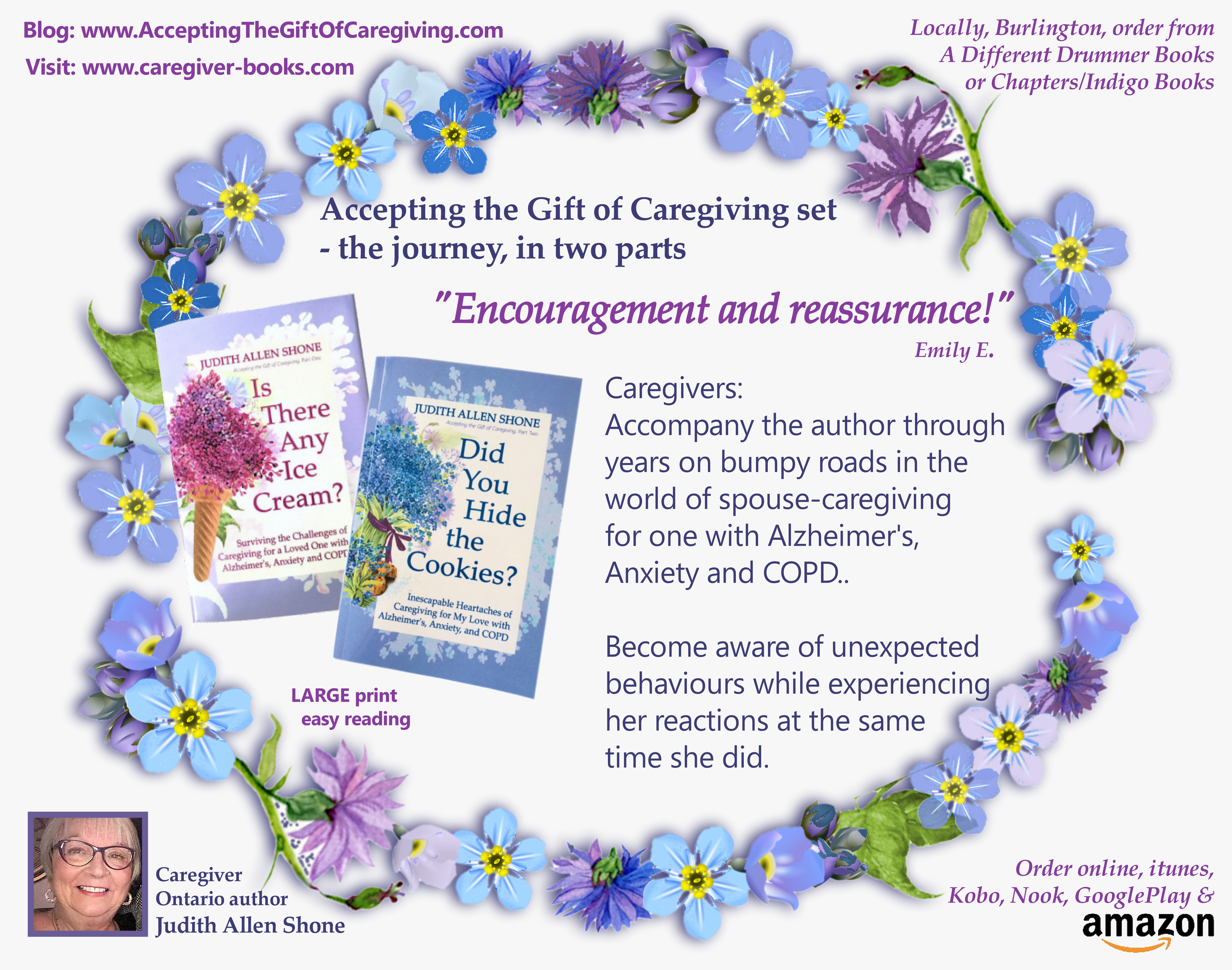
 Accepting the Gift of Caregiving