
May 14, 2024 by Judith Allen Shone – Happy Mother’s Day
What does a caregiver’s life feel like?
Do they need help? Can you and I help?
If so, how?
At various times throughout the ten years I cared for my loved one, we gravitated toward and joined with others who, like us, spent their day facing the challenges of caring that came with living in Alzheimer’s world. Thank goodness there were other caregivers who understood and places to meet with one another.

We participated in education classes, learning with others in similar situations. We spent weekly art, exercise or music activities together while sharing stories and learning from one another about the situations memory loss had introduced into our lives. We kindled friendships with others walking similar pathways, each one waking up to unknowns few of us had ever experienced or expected. We talked of days when life presented us with what we felt were unsurmountable obstacles, days when we’d climbed more mountains and killed more bears than we ever envisioned possible. We had lots of questions and many wishes but didn’t always have answers.
In most cases, each caregiver was caring for a family member. Few of our caregiver friends had much time to be supportive for one another. Thinking about, planning for, and acting on ideas took time and energy we did not have. We, were drained, sleep deprived, and at our limits, giving the best we had at ‘that’ moment.


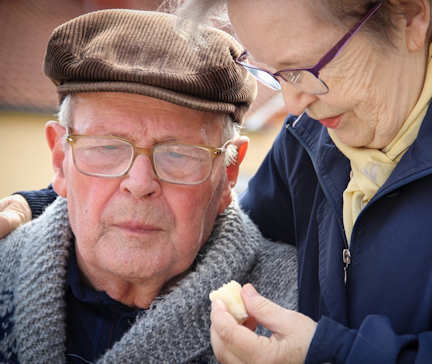


Ask any caregiver, they are likely to tell you how desperate, alone, exhausted, and useless they feel. How on earth did we keep going?
People on the outside of our bubble were not always aware of the depth of despair each of us felt. Few knew the care-routines that excluded time for our own needs. Not everyone lived lives caring for another 24/7; many had no idea there was a need to ask if they could help at all. I noticed not everyone was ready for uncomfortable conversations. I know I was not alone in those experiences.
What We Might Do for Caregivers





- LISTEN… so they feel HEARD and UNDERSTOOD …taken seriously. You won’t be able to solve the problems you hear about, but you can give your full attention to the person talking to you, telling you what is uppermost on their mind. You can even make calls to professionals who might have answers, who can follow-up with the caregiver. But when you listen you are giving a most needed support at the moment.
- KEEP CONVERSATIONS LIGHT AND POSITIVE ..no horror stories or negative anecdotes.
Even if you have know something, but it might be negative, keep it to yourself. Your role is to relieve stress, to just ‘be there’, to listen and try to understand, to give time for the caregiver’s mind to take a break from their normal routine of being ‘on alert’ 24/7. Keep criticism and judgement out of the conversation. Ask how their day is, allow them to discuss, to lead the chat. Let them know you hear them, even that you admire them. - OFFER TO DO SOMETHING SPECIFIC if you can help…
If you ask ‘what you can do’, they are unlikely to have something ready uppermost in their mind. They might not want to ask you for a thing. But if you hear something mentioned that you can do, or know something specific that would be helpful, suggest you will do it. It might be finding a resource, or internet information. It might be a wish for you to stop by at a certain time. Ask for a date you can bring a specific meal, ask about food restrictions. Bring a book to lend or give. Sing or play music for relaxation. Play games together. Call for a brief check-up on them, Shop for them. Ask if you can take them somewhere, be a ‘taxi’ both ways one time. Maybe you can take them to a doctor’s appointment, wait and bring them home? Or care for the loved one while they go visit the doctor? Even if they can’t participate, still include them in activities. Honor their requests, be it “yes” or “no.” Allow them forewarning of a visit because they have a routine they must keep. Just give them space by your offer to be there and what you do.
(Offer something else. See Caregiver Tips.) - NOTICE A NEED FOR THE SENSITIVE AREA OF FINANCIAL ASSISTANCE… if this seems necessary, find a professional to evaluate the situation, one who knows how to approach such circumstances without embarrassment. Ask an Alzheimer Society or organization for guidance. Let them know your concerns, but let them handle that area.
- AVOID DOING SOMETHING THAT MAKES MORE WORK for an already overworked caregiver. If you bring food, let the dish be disposable. If you lend a book, let them pass it on in their time. If you take them somewhere, be sure they have a ride home. Don’t make more work for them.





In your efforts to support, there may be times you feel something went wrong, that you were unappreciated. Remember, you do your best, from your heart. Be considerate. Be realistic. Be kind. Things will and do go wrong. Feel no guilt. Caregiver uneasiness is likely because they are focused on their concern for their loved one more than what you are doing.
You never really know what another is going through, but by offering to be there, showing you understand, you can become a nurturing part of their solutions rather than bringing more problems.
Take the opportunity when you are moved to do so. You won’t regret helping another person, nurturing them so they can carry on their warrior tasks.

REMEMBER…
Any ideas that can help caregivers for those with memory loss are welcome.
send your tips and ideas for us to post on CAREGIVER TIPS pages, or
make comments below. We know caregivers search for ideas…yours might be just the right one!
Love and be well, 🌷 Judy
How We Can Help Caregivers (c) May 2024 Judith Allen Shone, All Rights Reserved.
Read the story of a caregiver journey caring for one with memory loss.
It feels better knowing someone else has walked the path and life is possible.
eBook (Kindle reads either or both books to you!)
both books are available in LARGE PRINT in both paperback or hardcover
Read in support groups or book clubs.
Order from booksellers locally or booksellers online, or Amazon.

 Accepting the Gift of Caregiving