

Taking time to process grief is important caregiver self-care.
We need time to think, to sort out the confusion, and wade through the unfamiliar while finding our way forward, as we transition into what will become a new normal. We likely will find we are stronger and more capable than we knew.
I am not a grief therapist. But what I’ve found is that talking to someone usually helps the process. Someone who can listen while you illuminate your thoughts. Someone who sits there with you just so you don’t feel you are suffering your pain alone. Finding someone you feel comfortable with, having someone who hears you, allows you to do the grief work.
Through my grief groups, led by wonderfully experienced facilitators, I learned the value of talking about my losses, and about feeling the emotions that those losses have caused. Perspective changes and a sense of understanding evolves. I found peace in knowing there are no deadlines to keep, no right or wrong ways to grieve, no guidelines to follow. I know that no two people grieve in the same way. I learned we probably won’t experience the same feelings when we grieve for another person.
An open mind helped me find the perfect grief group for me. You may find refuge in your church or spiritual leanings. I do not profess any connection with any religion here. I believe each one makes his own choices.
Please believe that I am deeply sorry for your loss and the heartache you feel. I know no one but you can get through your grief. But I do hope my experience will confirm that you will move through it. Maybe I can bring you closer to finding someone to talk to so you will not be alone.

If you are grieving and need to talk to someone, find a group, or find just one person who will listen so you can process. If you feel you are not ready, wait. If you feel you need more time, take it. Listen to your inner guidance…it knows you best. If you still are not sure, you might find what helps you in various online and book resources…there are so many. You might begin with books by Alan D. Wolfelt, PhD. Or you can contact me.…no promises, but I might be able to help you find a path forward.

AFTER MY LOVE PASSED,
I spent more than a year alone, deep in thought about life, about My Love and caring for another, and for myself. Some called it processing grief; I called it sorting out my life…maybe because grief was just too painful a word at its core. I went from one issue to the next, fussing about things I wished I had said, or wished I had done, yet realizing it was too late. I never fathomed how difficult letting go would be, but I found I had to either live with guilt or learn the hard lesson of letting go of what I could not change.
On reflection, I recognized that being the caregiver for my partner for ten years had changed how I experienced love and life with My Love, and how I was as a partner. Throwing his Alzheimer’s, COPD, and anxiety into the situational mix and adding my caregiving uncertainties, challenges, and exhaustion easily revealed our life of turmoil in those days.
I recalled how My Love began to lose his inner natural masculine sense of leadership. His decisions became questionable, and communication became confused. He misused words which made his wishes harder to understand. And then some words meant nothing. His physical abilities became unpredictable; some days he could walk, while other days he could not stand up. Some meals he’d eat without issues; but there were days I had to cook a second meal because he could not chew or swallow what I originally prepared. I learned no schedule was set in stone; flexibility had been the byword of caregiving. He got his days and nights mixed up; time meant nothing to him. His daily health routines fell apart. And while I let him do for himself what he could, eventually, I had to help with most his life functions. He’d forget where he was, and I’d have to be ready to guide or assist him with whatever he was attempting to do. It was grief that helped me sort all the vivid memories, and let them rest.
A bit of relief came when I recollected that he had anosognosia, the condition where the brain does not let the person with the illness recognize there is anything wrong. I dared to laugh at times, thinking what a stupid wonderful enigma, a blessing, it had been that he had gone through his wicked disease thinking he was fine, never truly knowing he was going through those terrible years. Of course, the rest of us weren’t so fortunate.
It was through the grief process that I realized how, as his sole caregiver, most of the time I had been ‘on alert’ and ready to act, 24/7. I had spent enough time feeling that because his life had been in my care, I had to account for whatever had happened to him. I finally recognized it was time to let go of feeling responsible for everything. We had simply been living life, not what we expected, but life, nonetheless.

I mourned the loss of the person I had known. His role as the generator of laughter, the creator of fun outings, and the instigator of spontaneous activities dwindled over time. To keep our love-light burning, I briefly tried-to ‘act’ his part in our life, but I could not step into his role. My energy had been spent taking care of his increasing new needs. I had nothing left to be a catalyst for what he had been, what I missed. I tried but could not replace the missing pieces for us. Grief allowed me to see that I alone could never have become the two people we once had been. I welcomed the opportunity to be grateful I had had those experiences at all.
I remembered how, as his disease progressed, I began to doubt myself, my previous decisions, as well as my current abilities. Those caregiving years changed how I understood the experience of love and our life, and it changed me. I was not that strong person who everyone said could handle whatever life threw at me. I was only as educated as the lessons learned in the most recent Alzheimer’s class, or the details gathered from the latest discussion with one of his many doctors. I had no roadmap to follow and had only an inkling of where we were headed. Looking back, I finally understood that it would have been obvious to anyone observing that ‘strong, intelligent, and capable‘ had all forsaken me. No wonder PSWs, care support, and others ‘on the outside’ were concerned.
Grief helped me evaluate what I had just been through. Changes didn’t happen overnight. I felt confusion as the dynamics of the relationship during his illness slowly changed me into someone else, and My Love into a stranger. The person I originally fell in love with slowly vanished. While I felt deeply for this human, he was no longer the man I had agreed to live with for the rest of my life. I recognized that I had consciously chosen to live with and care for ‘whoever’ showed up each day.

As I sat in my grief, sobbing for days because I didn’t know what to do, I contemplated the progression of his condition, and how his memory loss had impacted our life, day-to-day. Of course, I missed him, but remembered all the romance, drama, wonder and excitement, friends, travel, joy, and even anxiety that he had brought into my life, a life we had nurtured together. And, yes, I cried because it was over…I missed who he had been. I realized I would never find answers. We could no longer have discussions for me to understand if he actually felt as he behaved, or if he was acting ‘under the influence’ of memory loss. Letting go of what I could not control was difficult because it brought up questions I could never solve. Thankfully, time brings clarity. At some point the unresolved issues vanished from my mind, the questions became unimportant. The sun seemed to shine and the air cleared.
Long before I was My Love’s caregiver, he had confessed I was the love of his life, (I knew he meant ‘aside from his boat’) his support, and someone who made his life better. He asked me to be with him for the rest of his journey to help him fulfill his dreams. Whose heart wouldn’t melt, enchanted by such adoration?
I returned his devotion with affection, attention, and care. After all, he too, had been the love of my life. I had wanted to be there for him in the capacity of an encourager, a partner, as well as a love mate. It was the learning experience of my life. Love had a much deeper essence than I first understood. Doing the work of processing grief helped me to see the memories of love that I had to reflect on.
In the two years following his passing I gave much thought to the word ‘love’ and what it meant in my life…my search took me down many rabbit burrows. I still find it a fluid word, with a definition that seems to flow right beside me as my life carries me along a path with wonderful, new and unexpected curves, bumps and bends.

So, what did I find love is, anyway? Most of us seem to spend a lot of time looking for love, defining love, testing love, practicing love, singing about love, reading about love, and some even living love…loving.
Love might mean one thing to me as I love another and it might mean something else to that person I am loving. My interest initially was to figure out how love worked and how it had impacted us when death became part of our relationship. I’m still popping down those rabbit holes.
I’m not even sure I knew I was ‘looking for love’ when I was younger. When I observed someone who seemed nice, kind, generous, thoughtful, and gracious, I suspected they were a special person. Sometime in my youth, I sensed that was my model for how I wanted to treat others. So, for me, that was love. No matter where I was, I was drawn to that energy. I think, if I could have, I would have bathed in that energy. It never dawned on me that there were love codes, guidelines to find the right love, rules about relationships that reflected the dynamics of love, or that love could come and go, turn on and off. I thought, and believe still, that love is a lifestyle we choose. One thing I do know, I still work at it consciously.
Even now, sometimes, just as in the early part of my grief period, when others tell their stories, I question if our relationship was as good as it could have been. Did I do enough? Did I do things wrong? Grief can take us to the dark side if we are not paying attention. Greif confirmed I had to learn to stop thinking like that. Love would never think or behave like that. None of it made any difference now.

When we lose someone we love, we must learn not to live without them, but to live with the love they left behind. ~Unknown
Now, nearly three years after his passing, I want to go to his gravesite. I have not visited but one other time.
Recently I have been wondering if our being together has been a dream – I need to go this month to feel the tie, to sense the bonds we created together, to know it all was real. I want to remind myself what I knew for sure, what I felt for sure, and what I believed then.
I remembered words from a therapist when I shared My Love’s passing:
“His life ‘as we knew him here’ is complete, but his life is not ‘done,’ he is only gone from this space. His energy is still around us…everywhere.”
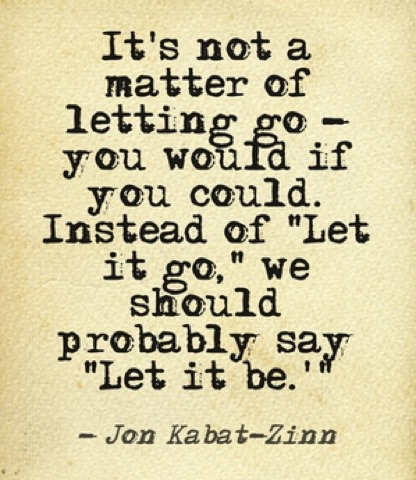
How do you let go of someone you’re connected to? I can’t. Maybe that’s why I only wanted to consider moving forward…not letting go. Maybe I’ve misunderstood, and he’s just been nudging me to move forward, reminding me that grief is love that has nowhere to go…maybe I could let his love influence my passions. That made me take a deep breath, as if that might be it.
Or maybe, I must learn to “Let it be.”
Would that work for you, too? I hope you find that grief is a process to help you make sense when you experience loss….and there are many kinds of loss that evoke intense emotions. I found that by going through the process, taking the time, doing the work, I grew in understanding of my life and its lessons. I hope I have gained compassion, empathy and love for others and for life.
His love has been present throughout grief and still is helping me transition. Obviously, grief will never be ‘over’ or finished….it takes time to process a relationship of such depth.
I’ll know I’ve made headway when I can laugh more readily…let it be…soon.


CONSIDER: as holidays come around each season, caregivers and those grieving sometimes need a lift. Remembering them might be the highlight of a holiday they might otherwise be spending alone..
Transitioning Through Grief © 2024 Judith Allen Shone, All Rights Reserved
Get a glimpse of what caring for one
with Alzheimer’s, COPD and anxiety
might look like, might FEEL like.
Read about the journey of a caregiver.
Learn, like we all do, that we need each other on our journey.








 Accepting the Gift of Caregiving